Metal ceiling: smart, durable, designed to stand out

When it comes to interior design, ceilings play a crucial role in shaping the overall aesthetic and functionality of a space.
Factors such as aesthetics, cost-effectiveness and long-term maintenance influence the choice of ceiling material. It doesn’t surprise that metal solutions are becoming increasingly sought-after because they meet all these needs.
Types of metal ceilings
For architects, ceilings are more than just overhead planes: they’re spatial tools. Metal ceiling systems offer a versatile palette of forms, finishes, and functions that can support the design vision while meeting performance requirements for acoustics, access, and durability.
Let’s consider a few examples.
- Lay-in panels/Tiles
These rest in a visible or hidden T-bar grid and are easy to install. They also make it simple to access mechanical systems above the ceiling. - Clip-in panels
Designed to snap into a concealed grid, these create a smooth, seamless finish with no exposed framework. Ideal for clean, modern environments — often with enhanced acoustic properties.
- Open cell ceilings
Made from open grid structures (usually square or rectangular). These keep ceilings visually open while hiding ductwork or wiring. They also allow for good airflow and acoustic control. - Metal mesh ceilings
Built from expanded metal, mesh ceilings strike a balance between industrial texture and visual transparency. Lightweight and tough, they allow you to see through to the infrastructure above without sacrificing a defined ceiling. - Curved ceilings
These can bend into concave, convex, or wave-like forms. Great for dynamic, futuristic designs or layered ceiling effects. - Perforated metal ceilings
Many ceiling styles can be perforated with holes in different shapes (round, square, hex) to improve sound absorption when combined with acoustic backing.
Materials

Metal ceilings offer a wide range of options: not just in design, but also in materials. Each metal comes with specific properties that make it suitable for different applications, both technical and aesthetic.
- Aluminum
Lightweight, corrosion-resistant, and highly malleable, aluminum is one of the most versatile materials available. It’s often chosen for large-scale projects and is valued for its sustainability, as it is frequently made from recycled content. - Steel (galvanized or stainless)
Strong, durable, and fire-resistant. Galvanized steel is a reliable choice for industrial environments, while stainless steel offers superior corrosion resistance along with a sleek, modern appearance. - Tin
Primarily used in decorative stamped panels, tin brings a retro or vintage feel—ideal for classical interiors or historic restorations. - Copper
Known for its warm tone and natural elegance, copper adds distinction to interior spaces. It’s also prized for its antimicrobial properties and the way it develops character as it ages.
Finishes & treatments
Finish selection dramatically affects visual tone, performance, and durability. Available treatments include:
- powder coating (highly durable and available in nearly any RAL colour);
- pre-painted/post-painted (offers colour flexibility before or after fabrication);
- anodized (common for aluminum, adds a corrosion-resistant and sometimes coloured finish);
- polished (high-gloss, mirror-like surface for bold modern designs);
- brushed (it adds subtle, directional texture with a softer sheen);
- bead blasted (it produces a matte, diffused appearance);
- wood grain / stone grain (realistic textures that mimic natural materials for warmth without the weight or cost);
- water ripple (it creates a dynamic, reflective texture with visual movement).
Benefits of metal ceiling
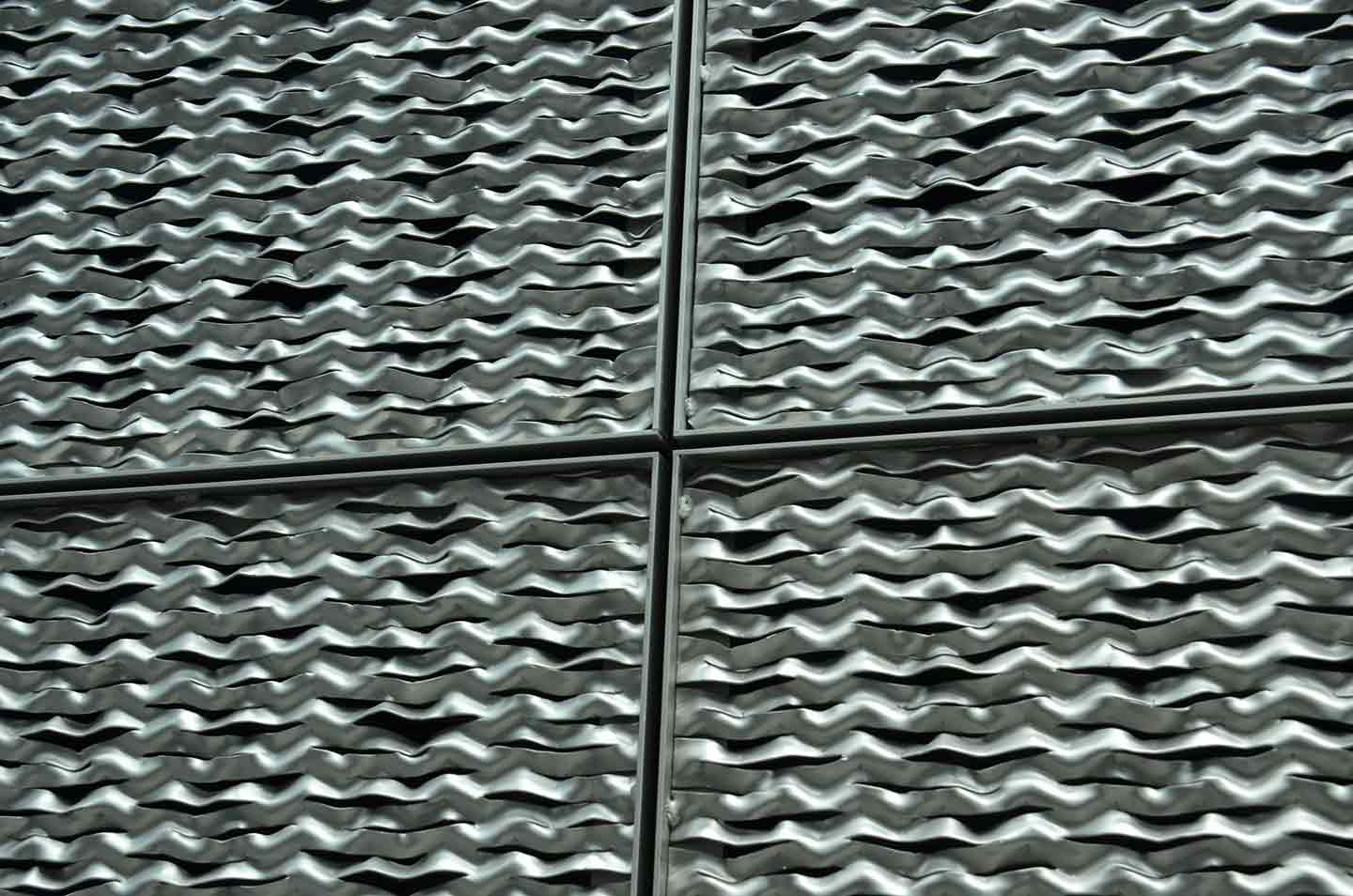
Metal ceilings offer real advantages in durability, safety, hygiene, and performance, making them a smart choice for both commercial and residential spaces.
- Metal ceilings are highly resistant to impacts, moisture, mold, and pests. They don’t warp, stain, or sag, even in humid environments like kitchens or bathrooms.
- Being non-combustible, metal doesn’t fuel flames or release toxic fumes. It adds valuable fire protection, especially in public or multi-occupancy buildings.
- Their smooth, non-porous surfaces resist stains and are easy to clean, ideal for healthcare, food prep, or any setting where hygiene matters. Maintenance is minimal: just occasional dusting or wiping.
- From industrial to high-end, metal ceilings adapt to any interior. Choose from a wide range of finishes (powder-coated, brushed, anodized, wood-look, etc.) and forms (tiles, baffles, planks, open cells, or custom shapes) to match your design intent and conceal overhead services with ease.
Thanks to their performance, design and longevity, metal ceilings have earned their place in both commercial and residential architecture for good reason.
