Innovative materials in architecture: an overview

The world of architecture is constantly looking for new solutions, not only in style. The use of new materials, for example, makes it possible to combine design and sustainability, a very hot topic. Let’s find out which are the most innovative materials and their characteristics.
What is innovation in building materials?
Research, technology and improved production processes are key steps in building materials innovation. The aim is to enhance functionality, eco-friendly approaches and buildings’ aesthetics.
If we consider what is new in the construction industry, we discover products that were previously unimaginable.
Pollution absorbing bricks
Sustainability in construction is becoming increasingly important as the population grows and pollution levels rise. These challenges are driving the industry to find environmentally friendly solutions. One such innovation is pollution absorbing bricks.
These special bricks clean the air by filtering it as it enters a building. Made from porous concrete, they are designed to direct airflow through a built-in filtration system. Compared to high-tech air filters, these bricks are more affordable, and use less energy. They are a practical and cost-effective option for greener construction.
Pigmented concrete
Pigmented concrete is created by incorporating dry powder or liquid pigments into the concrete mix. These pigments are often derived from iron oxide or synthetic dyes. While traditional concrete is typically grey, the use of pigments allows for a wider palette of vibrant hues.
Pigmented concrete is highly durable. It withstands abrasion and maintains its colour even under prolonged exposure to high temperatures and sunlight. It is commonly used in decorative applications such as floors, facades, and other design-focused projects.
Self-healing concrete
Self-healing concrete is an innovative material designed to mimic the way the human body heals wounds. It works by releasing certain substances into the concrete when damage occurs. This is achieved by incorporating fibers or capsules filled with adhesive liquids into the concrete mix.
When cracks form, these capsules or fibers break open, releasing the liquid, which then seals the cracks and restores the concrete. Although this technology is still under development, it holds great potential.
Self-repairing concrete could significantly extend the lifespan of structures and reduce the cost of maintenance and repairs. It helps to avoid corrosion, ensuring the structure’s durability and strength.
Power generating glass
With buildings responsible for almost 40% of global carbon emissions, finding ways to reduce their energy consumption is critical. This challenge led to the development of energy-producing glass. The idea of transforming windows into solar panels has now become a reality.
Energy-producing glass looks like standard glass but has the unique ability to redirect invisible light wavelengths and turn them into usable energy. This innovation not only lowers electricity costs and reduces carbon footprint: it also enhances the visual appeal of buildings with its modern design.
What are some new and innovative building materials that could be used in the future?
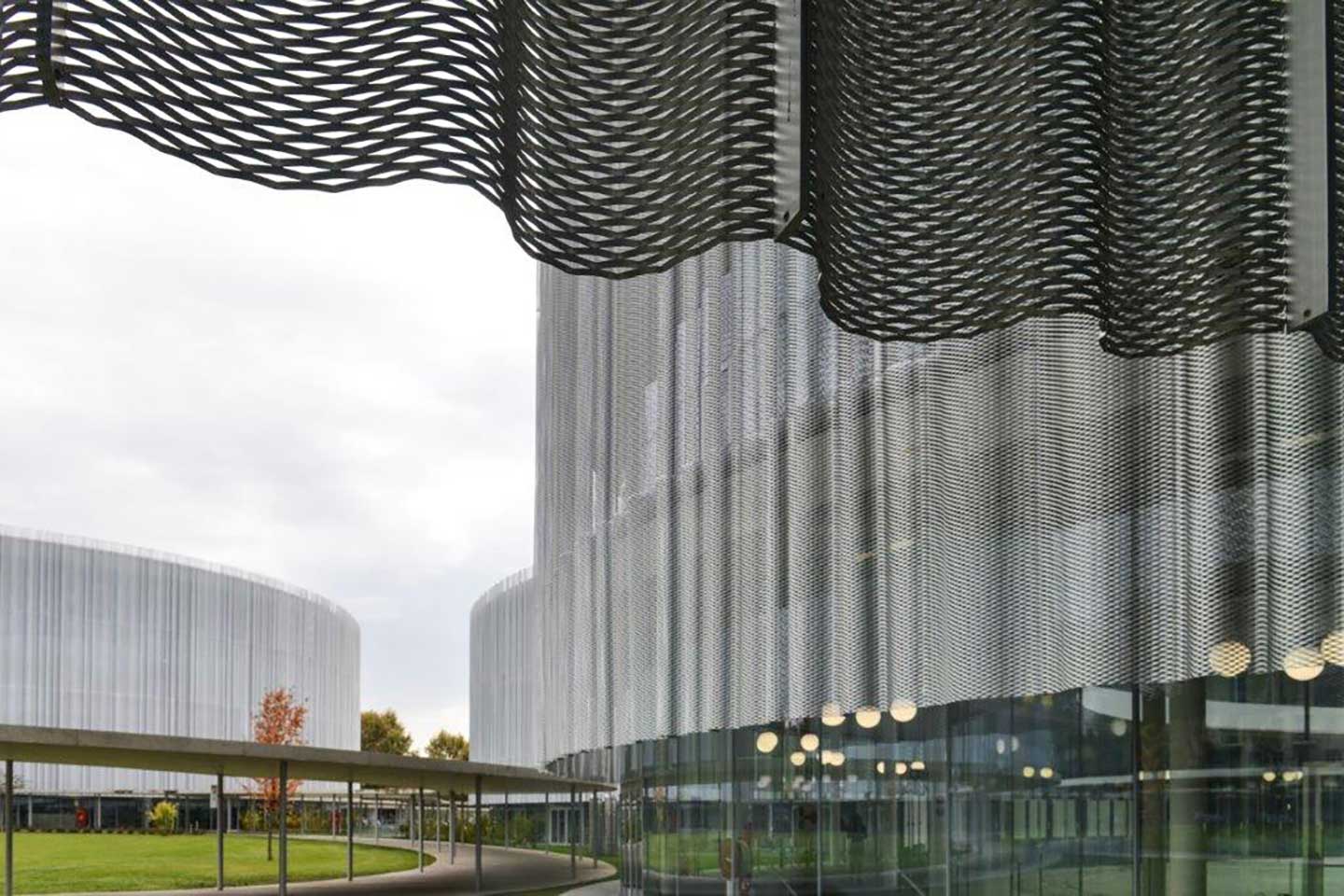
The list of the most innovative building materials includes other examples destined to become more and more popular in the future.
Hydro ceramics walls, for example, are a proper modern invention. They are designed to help buildings stay cool by reacting to outdoor temperatures. These walls are made from clay panels and water-filled capsules that absorb water and store it.
- When it gets hot outside, the water inside the capsules evaporates.
- It releases cool air into the building and lowers the temperature.
- Hydro ceramic walls reduce the temperature in a room by up to 5 degrees Celsius.
- They also increase humidity by 15% in hot, dry areas: spaces become more comfortable.
- Since clay and hydrogels are affordable materials, this technology offers a cost-effective solution for cooling buildings.
Given the increasing importance of sustainability, the construction materials of the future are made from waste and recycled elements. It is demonstrated by biochar, created by heating organic matter at high temperatures in the absence of oxygen.
- It is often mixed with soil additives to improve water retention and capture moisture.
- Biochar is a valuable building material. It helps reduce greenhouse gas emissions from traditional materials like concrete and plastics.
- Using biochar in brick production reduces the amount of cement needed, lowering the carbon dioxide emissions associated with concrete manufacturing.
- Additionally, biochar can be combined with plastics to produce bricks, providing an innovative way to reduce plastic waste worldwide.
The creation of cutting-edge materials like 3D graphene and nanoparticles highlights the vital role of scientific research in revolutionizing construction. These advancements pave the way for stronger, more efficient, and sustainable building solutions.
- Graphene, a nanomaterial known for its unique thermal, electrical, and optical properties, has taken on a new dimension with 3D printing technology.
- By compressing small graphene flakes under high pressure and heat, scientists have created 3D structures that are ten times stronger than steel but only 5% as dense.
Similarly, nanotechnology has transformed construction by introducing nanoparticles to improve material strength and efficiency.
- Nanoparticles such as nano-silica, nano-titanium, carbon nanotubes, and graphene oxide are added to cement to enhance the flexural, tensile, and compressive strength of concrete.
- These tiny materials also limit the need for natural resources, enabling the creation of more durable materials that take up less space.
These huge developments in building materials underscore the importance of scientific innovation in addressing global challenges. Researchers are shaping a future where construction is not only stronger and more efficient but also more environmentally friendly.
What are smart materials in architecture?
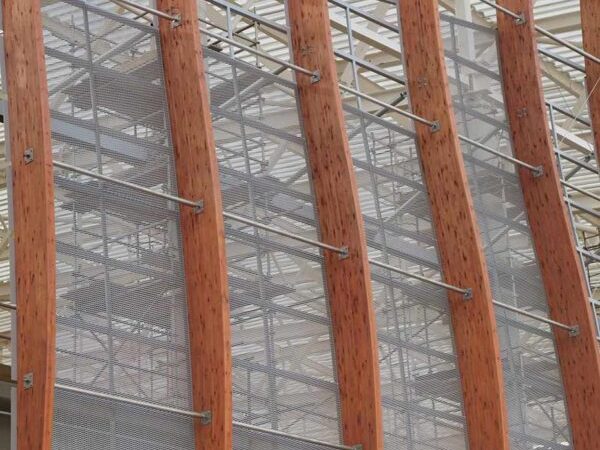
As we have seen, architecture is being transformed by innovations in materials. The combination of advanced and more traditional solutions creates an updated aesthetic.
Bricks that absorb pollution, coloured concrete, and self-healing concrete will be important for building futuristic walls. Extra style can be added by using expanded metal as a cladding solution.
It adds dynamism and creates plays of line and light and it is a design product with sustainable characteristics. Its production, in fact, does not generate waste and is made from recycled metals such as aluminium.
The final result is a versatile facade.
It also matches perfectly with glass facades.
- The expanded metal shading acts as a solar shield to reduce the impact of external light on interior spaces.
- At the same time, the openings on its surface provide visibility from the inside to the outside, giving an overall airy feeling to the rooms.
- The different mesh patterns give facades and other parts of a structure a sense of flow and rhythm.
The clear lines make expanded metal suitable for different architectural styles, from industrial to minimalist, and it is also considered for building regeneration: a real innovative material.
What is innovative design in architecture?
Innovative materials, but that’s not all. Modern architecture is changing how buildings are designed by using creative ideas, new technologies, and eco-friendly practices.
- Architects explore unusual shapes, advanced design tools, and materials like recycled or 3D-printed options to make bold designs.
- Buildings are also becoming smarter, with features like automated lighting, climate control, and energy-saving systems.
- New construction methods, like modular building and robots, make the process faster and more efficient.
- Sustainability is a big focus, with designs that use less energy, save water, and rely on environmentally friendly materials.
- Architects also think about people’s needs, creating spaces with natural light, fresh air, and easy access for everyone.
- They often work with local communities to design buildings that reflect culture and address issues like climate change or poverty.
Thanks to smart ideas, new technology, and caring for the environment, architecture is creating spaces that are practical and special.
