Decorative expanded metal for interior design

Aesthetics, functionality, and durability: these are the main reasons why expanded metal is increasingly popular in contemporary interior design. It combines three key qualities in a single material.
Architects and interior designers value expanded metal for its ability to shape environments while keeping spaces visually open. Thanks to its structure, it supports in fact a strong connection between light and space, creating interiors that feel airy, modern, and balanced. In interior design, specifically, it allows spaces to be divided, protected, or decorated without losing the sense of openness or open air flow.
Common applications
One of the most frequent uses of expanded metal in interiors is for room dividers.
- Offices, restaurants, hotels, and residential spaces use it to separate areas while still allowing light to pass through.
- This makes rooms feel connected rather than closed off.
Expanded metal is also widely used for wall panels and ceilings.
- Its textured surface adds depth and character, especially when combined with artificial or natural lighting.
- The mesh creates soft shadow effects that change throughout the day, making interiors more dynamic and visually engaging.
In staircases, balconies, and mezzanines, expanded metal works perfectly for railings and balustrades. It provides safety while remaining transparent, helping maintain visual continuity across levels.
Designers also integrate expanded metal into custom furniture, shelving, and decorative features, where the material becomes a defining element of the interior style.
Design versatility
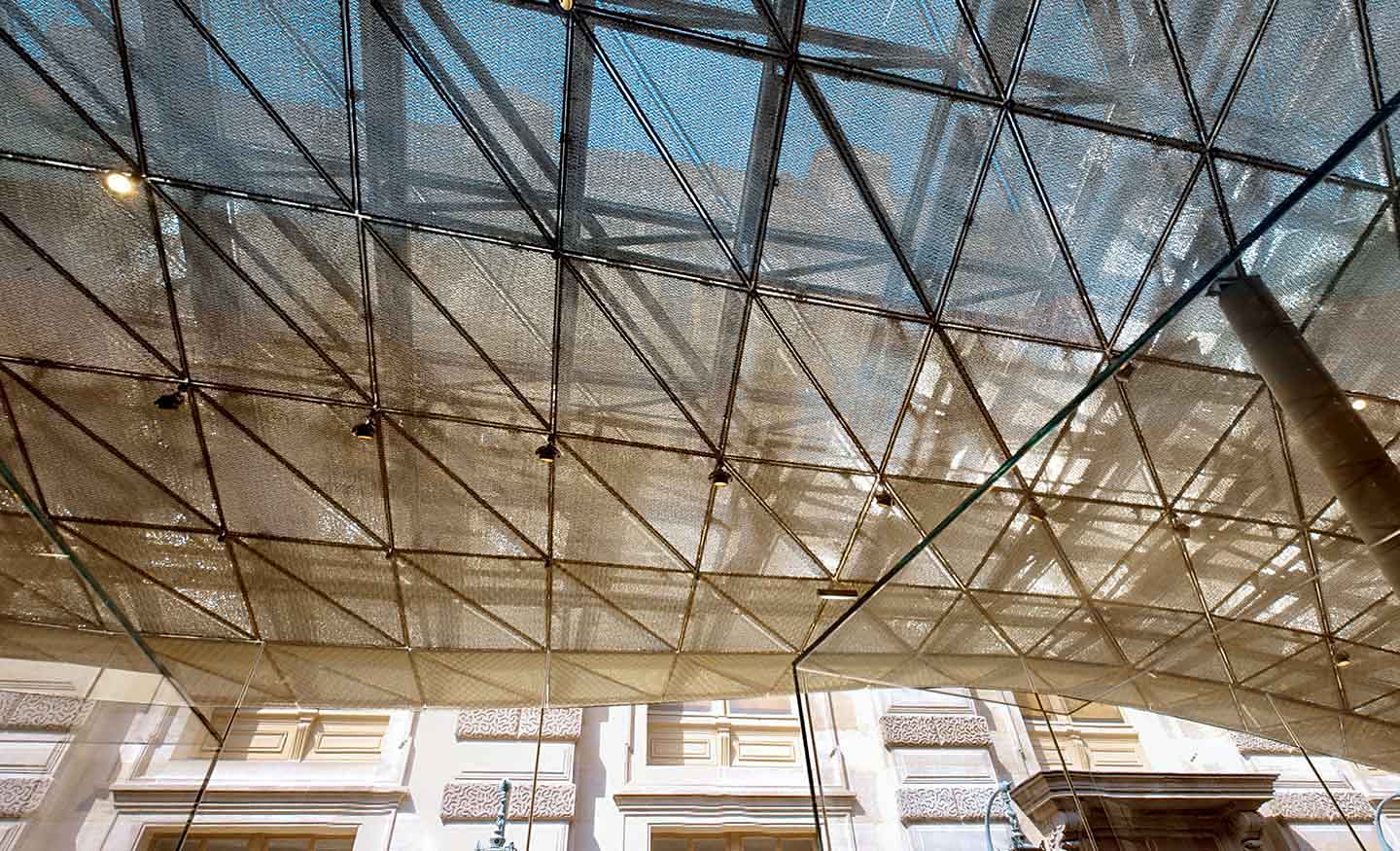
The versatility of expanded metal interior design lies in its wide range of materials, finishes, and patterns.
- Aluminum, for example, is often chosen for its lightweight properties, while steel offers higher strength and durability.
- Copper and brass are preferred when a warmer or more refined aesthetic is desired.
Finishes strongly influence the final look.
- A raw material finish highlights an industrial and honest character.
- Powder coating or anodizing introduces color and improves surface resistance.
- This flexibility allows expanded metal to fit seamlessly into minimalist, industrial, or contemporary interiors.
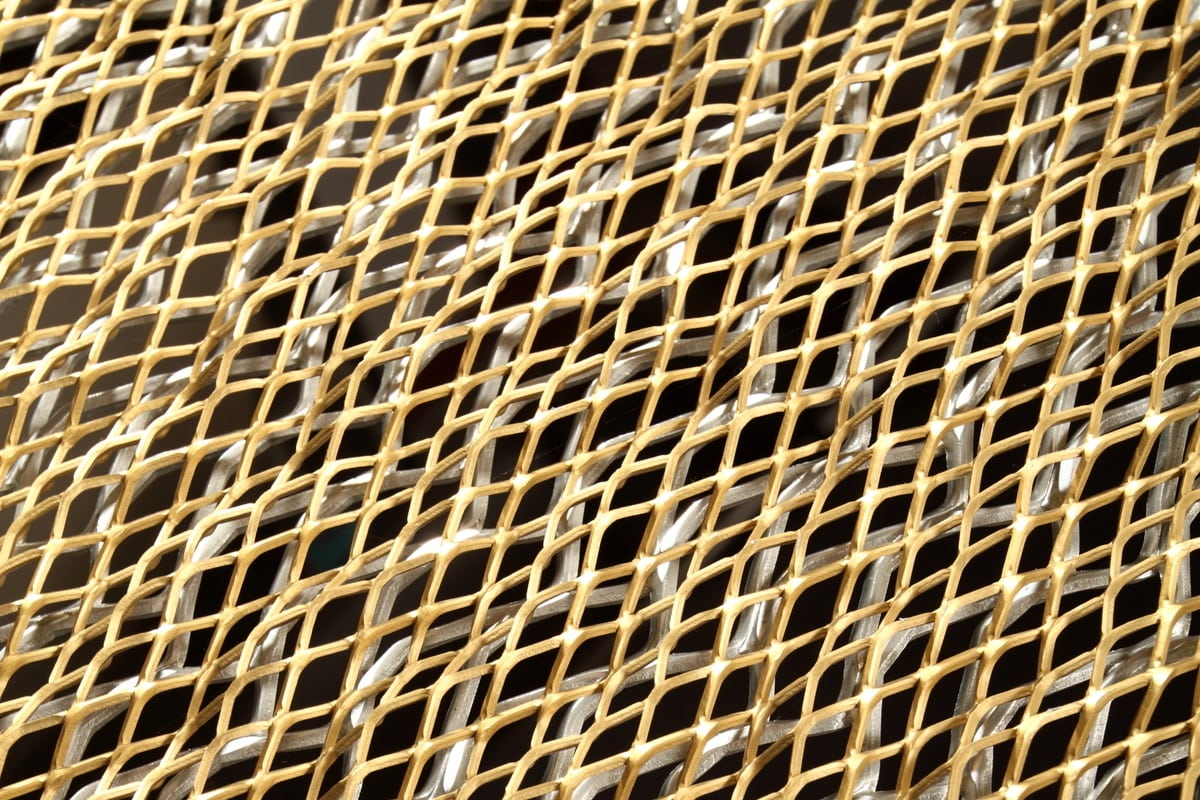
Mesh size and pattern also affect how a space feels.
- Larger openings increase transparency and airflow, reinforcing the idea of open air interiors.
- Smaller meshes offer more privacy while still allowing light to filter through.
Designers can precisely control how light and space interact, using expanded metal as both a functional and decorative solution.
What is expanded metal?
Expanded metal is a rigid metal mesh produced by cutting and stretching a single metal sheet. The result is a seamless structure that combines strength, openness, and versatility, making it suitable for architectural, interior, and industrial applications.
What is decorative expanded metal?
Decorative expanded metal is a metal sheet that is cut and stretched into a mesh pattern, used in interior and architectural design for visual impact and practical performance.
What are the benefits of expanded metal as a decorative element?
Expanded metal is strong, lightweight, and low maintenance. It improves airflow, enhances light and space, supports sustainable design, and adapts easily to different interior styles.
