Architectural glass and metal: the perfect combination

Modern architecture has changed a lot over time, and materials like glass and metal have been very important in this transformation.
Their combination contributes to the creation of projects that embrace contemporary and minimalist design, highly valued by the world’s leading architecture firms.
What is glass used for in architecture?
Architectural glass is a type of specially designed glass used in buildings for both functional and aesthetic purposes.
It is engineered to meet specific requirements such as strength, durability, thermal insulation, and energy efficiency.
Common types of architectural glass include:
- tempered glass (known for its strength and safety);
- laminated glass (used for safety and noise reduction);
- insulated glass (ideal for energy efficiency);
- Low-E glass (perfect for controlling indoor temperatures).
It isn’t just a building material: it’s a canvas for creativity and innovation, offering endless possibilities for design.
What is the meaning of glass in architecture?

Glass has a profound meaning in architecture, symbolising transparency, openness, and modernity. It’s more than just a medium to let in light; it’s a statement of design philosophy.
For architects, glass is a versatile material that allows for bold experimentation, enabling them to redefine conventional spaces.
Why do architects use glass?

Architects use glass for a variety of reasons, driven by both practical and creative motivations. Let’s break down the primary reasons.
- Natural light. Glass allows ample daylight to flood interiors, reducing the need for artificial lighting and creating healthier, more inviting spaces.
- Views and connectivity. Large glass panels provide uninterrupted views of the surroundings, making spaces feel expansive and connected to the environment.
- Design flexibility. Glass can be molded, shaped, and treated in countless ways, offering immense design flexibility.
- Energy efficiency. Advanced glass technologies, like Low-E coatings and double glazing, help regulate indoor temperatures, cutting down on energy costs.
- Modern appeal. The use of glass in facades and interiors signals sophistication and modernity, often becoming a focal point of the design.
Architects leverage these benefits to craft buildings that are not only functional but also visually stunning and sustainable.
How have modern materials like glass and steel changed architectural design?
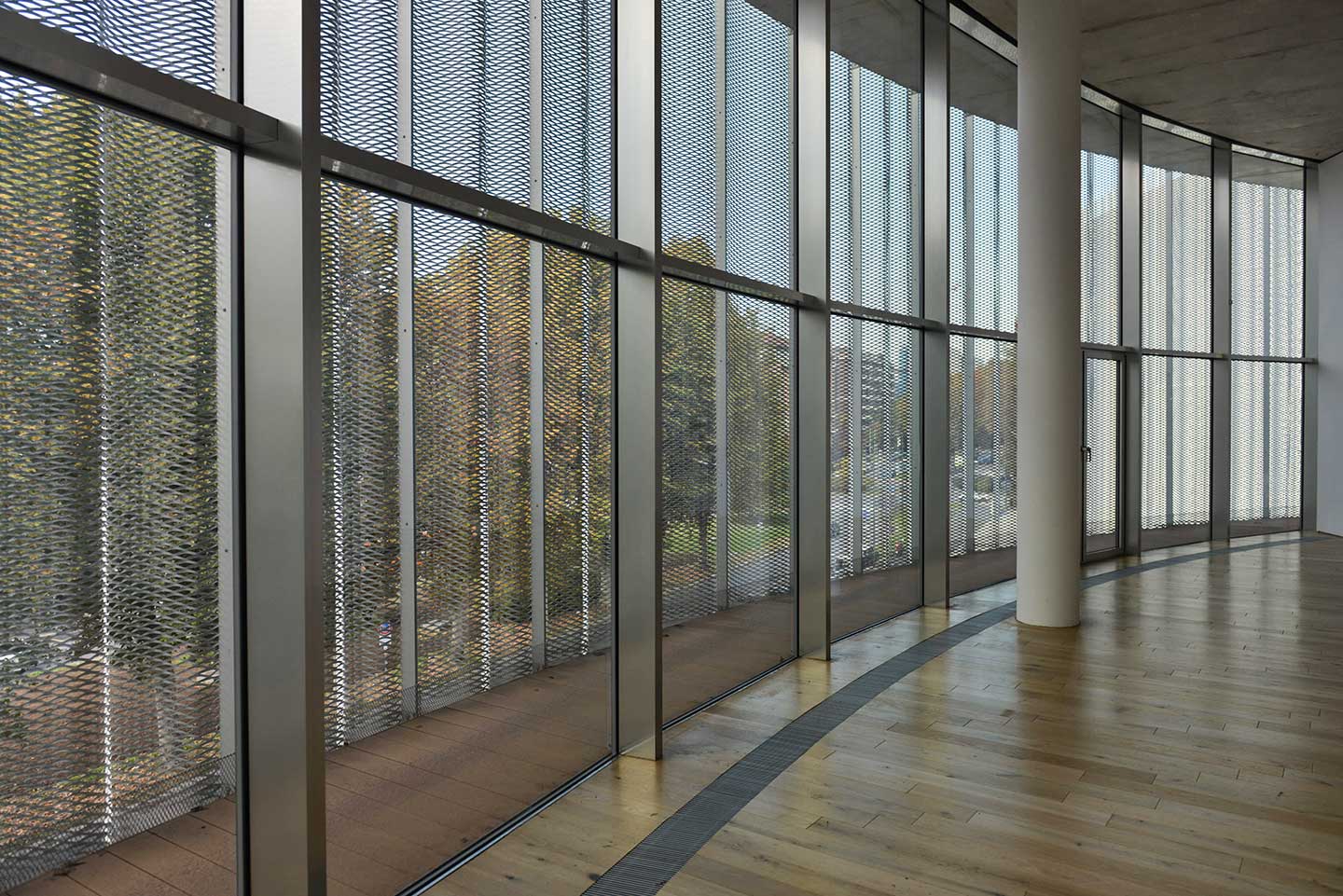
The realisation of modern and contemporary facades using glass can involve an interesting combination with expanded metal.
Expanded metal is a sheet material that has been cut and stretched into a mesh-like pattern. Lightweight yet sturdy, it is widely used in architecture for applications ranging from cladding to sunshades.
It is made from various materials: from steel to aluminum, from Corten to bronze.
Many architects have taken advantage of this solution to give character and personality to their projects.
When combined, architectural glass and expanded metal create striking, dynamic facades that blend form and function.
The combination of glass and expanded metal offers a harmonious balance of transparency, texture, and functionality.
- Contrast. The sleek, smooth surface of glass contrasts beautifully with the textured, patterned look of expanded metal, creating a visually captivating facade.
- Performance. While glass allows light and views, expanded metal can act as a sunshade, reducing heat gain and glare.
- Versatility. Both materials can be customized to meet specific design needs, from unique patterns to varying levels of opacity.
- Structural benefits. Expanded metal can reinforce glass structures, adding an extra layer of safety and durability.
These applications highlight the potential of glass and expanded metal to transform ordinary buildings into architectural masterpieces.
Architectural glass and expanded metal are changing the way modern facades are designed.
- Glass brings clarity, light, and a sleek look.
- Expanded metal adds texture, strength, and versatility.
- Together, these materials create facades that are not only visually appealing but also practical and eco-friendly.
